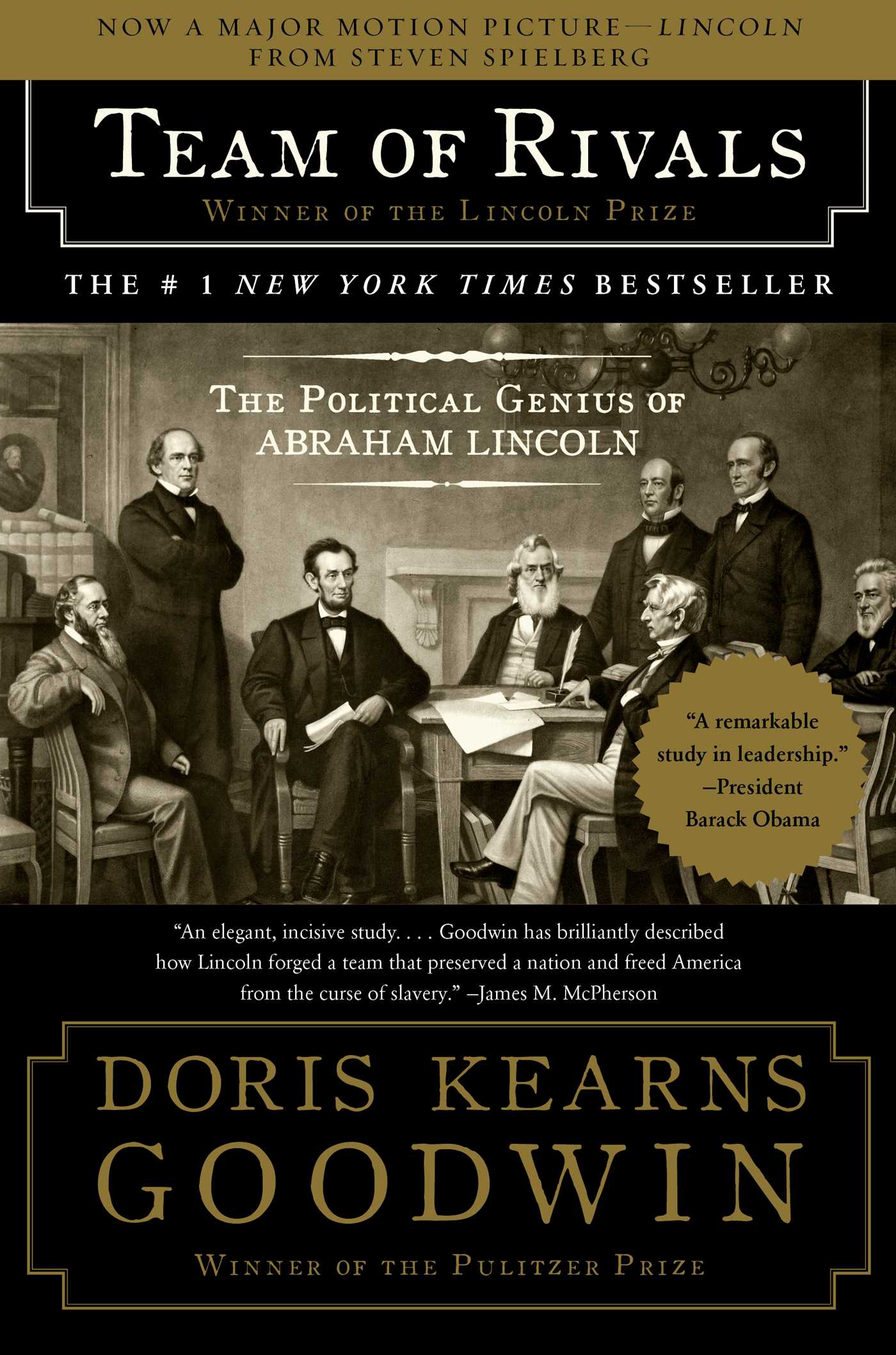
I cannot precisely recall what drew me to this tome. Perhaps it was my enduring passion for history, or maybe I was simply trying to understand why Lincoln is consistently ranked as the greatest U.S. president, surpassing even Washington and Roosevelt in historical estimations. Or perhaps, I simply yearned to comprehend what kind of character could lead during a nation’s most tumultuous period in a way that has been so universally acclaimed. But as I finished reading today, I discovered that Lincoln’s story transcends mere political narrative, and surprisingly, I found myself relating deeply to it. From his humble beginnings as a prairie Illinois lawyer with far less public recognition than contemporaries like William H. Seward, to becoming a figure who transcended U.S. history itself, I came to understand that just as Napoleon embodies the quintessential French ideal, Lincoln represents the very essence of American character.
The underdog spirit manifested in Lincoln’s life is truly fascinating. Life presented constant hardships throughout both his early years and adulthood. Born into an impoverished family in Kentucky, he was forced to develop a precocious maturity to navigate the austere frontier environment and to cope with the devastating loss of his mother at age nine. These challenging circumstances deprived him of formal educational opportunities that his contemporaries enjoyed. As he entered adult life, Lincoln found himself a small fish in the vast pond of national politics, overshadowed by more privileged and established figures.
One telling example is the McCormick v. Manny lawsuit in 1855. Initially contracted to defend the company in a patent dispute over mechanical reapers, Lincoln was abruptly replaced by Edwin Stanton due to doubts about his capabilities as a “backwoods lawyer.” Insisting on seeing this case to finish, Lincoln nevertheless attended the court to hear Stanton’s argument, where he was so impressed by Stanton’s argument that he mentioned to a friend
“For any rough-and-tumble case (and a pretty good one, too), I am enough for any man we have out in that country; but these college-trained men are coming West. They have had all the advantages of a life-long training in the law, plenty of time to study and everything, perhaps, to fit them. Soon they will be in Illinois . . . and when they appear I will be ready.”
But beyond the recurring theme of being at a disadvantageous position, what’s truly remarkable about Lincoln was his unwavering confidence in his own judgment and capabilities. This self-assurance was powerfully demonstrated in his 1862 appointment of Edwin Stanton as Secretary of War. Despite their past friction, Lincoln rose above personal grievances to select Stanton purely on merit. This decision not only showcased Lincoln’s magnanimity but also reflected his unparalleled confidence in his ability to manage the complex dynamics of his cabinet. By choosing someone who had once slighted him, Lincoln proved he could subordinate ego to the greater good while maintaining firm control over his administration’s direction.
But what lessons can we draw from Lincoln’s leadership in today’s world? His example offers guidance on a question I’ve long pondered: how to lead effectively while maintaining genuine compassion. In an era where many tech industry leaders prioritize efficiency above all else, where corporate management often seems devoid of human consideration, Lincoln’s balanced approach feels particularly relevant. He showed that empathy and decisive leadership need not be mutually exclusive. In the early days of the Civil War, Lincoln heard of a case involving William Scott, a young soldier from Vermont who had fallen asleep during picket duty. Scott’s dereliction occurred during his second consecutive night of guard duty, having volunteered the previous night to cover for an ill comrade. Wrestled with concerns that pardoning Scott might undermine military discipline, his compassion ultimately prevailed. After careful deliberation, he chose to intercede and grant Scott a pardon.
His compassion ultimately strengthened the army’s morale and loyalty. During the 1864 election, when Lincoln faced his former general George B. McClellan, who campaigned on a peace platform promising to end the war through negotiation. Despite the hardships they had endured, and knowing that Lincoln’s re-election meant continued fighting, the soldiers overwhelmingly cast their votes for him - a testament to the deep trust and respect he had earned through his leadership.
Finally, the patience, and accurate perception of the public opinion. After reading this book, I begin to realize that no one else can achieve the emancipation other than Lincoln himself. The push for emancipation was incessant even before the war with the “radical” wing in the cabinet, as well as in the congress all advocated for it. But Lincoln knows it’s not the right time. He accurately perceived that the northern states was unanimously fighting for the cause of saving the Union, instead of emancipation. Public opinion started to shift after 2 years of war, and the northern began to realize that the confederacy was using black slaves as a weapon in the battlefield, and the only way to counter this is to fight on a platform of emancipation. But with consecutive losses in the battle field, Lincoln again hesitated to issue the Emancipation Proclamation, in order to not look like this is out of despair. Finally, after the first major Union battle victory in Antietam, Lincoln issued the Emancipation Proclamation, and the rest is history. It’s hard to imagine anyone else could have achieved this feat, sustaining the pressure from every corner, and issue the proclamation at the right time.
There is a reason why he is viewed as larger than life. His magnanimous attitude helped tape the fractured nation back together, keeping the nascent Republican Party united. His wisdom and patience enabled him to make the right decisions at every critical juncture. And finally, his underdog background embodies that exact American spirit that no matter where you come from, as long as you have the talent, American will offer you an opportunity.